Skip to content

Colour editions now on Kindle Shop the books

Research

Pathways into the research

The three investigations below are Ralph’s reconstructions. He works from the texts, the archaeology, and the later traditions. They are not the conclusions most scholars would sign.

Method

Look in the wrong century,and the Bible looks like a myth.

The pages that follow set out that account. It is not the chronology taught in a seminary.

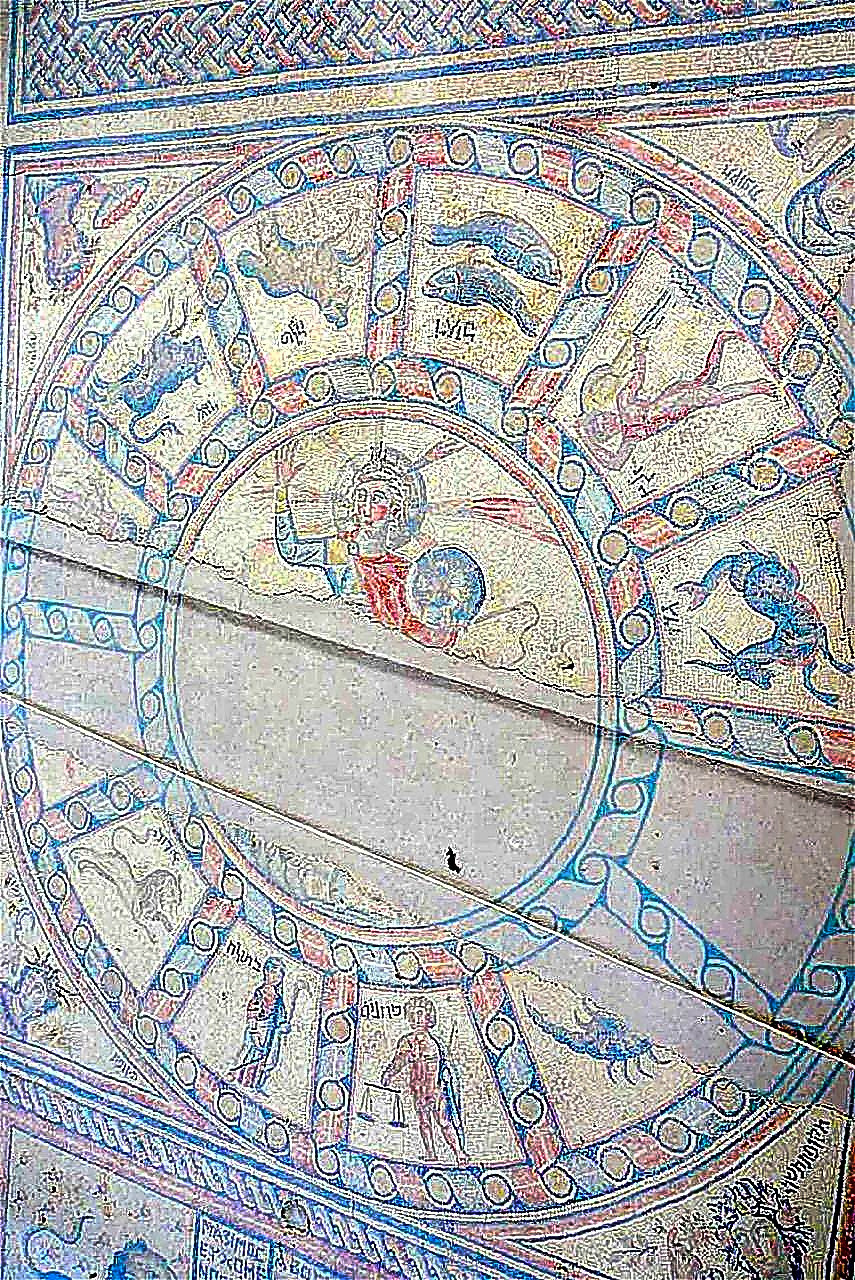
The Hamat Tevera zodiac mosaic on the Sea of Galilee
The Hamat Tevera mosaic on the Sea of Galilee.This was owned by Jesus of Gamala. Real photo enhanced by AI.

How Ralph Ellis Approaches Historical Research

He does not start from a doctrine. He starts from texts already in the record: Josephus, the New Testament, the Tanakh, the Talmud, and the Roman and Syriac historians.

He then sets those texts beside what can still be visited or seen: the site of Avaris, the citadel of Edessa, coins, stelae, and mosaics. The comparison is chronological. If a person is missing in the century the seminaries named, he looks in the century the other record names.

One similar name is not enough. He looks for the same office, the same family, the same city, and the same part in the same war. That chain of comparisons is the method of the books. It is not the account taught in the seminaries, and it is not presented here as the consensus of scholarship.

Where to read on

How Ralph Ellis Develops His Historical Arguments

How the argument is made

A chain of identifications

The question is not whether scripture is true. It is whether its characters can be found once the dates are allowed to move. Each book takes a person in scripture, places that person on a known event, and argues that they are the same individual. The next book starts from that identification.

  1. 1 · Begin with a historian

    Josephus already wrote that the Exodus was the expulsion of the Hyksos. The books start from that sentence, not from a doctrine.

  2. 2 · Move the date, then look

    If Abraham, Jacob, and Solomon are missing in the century the seminaries named, look in the century the Egyptian record names. The gospel books move the other way: out of the 30s, and into the Jewish Revolt of the 60s.

  3. 3 · Stack the matches

    A single shared name is not enough to make the identification. What he looks for is the same office, the same family, the same city, and the same part in the same war.

  4. 4 · Read a gap as a place to look

    When a name is missing from the page where it was expected, the other record of the same events is compared, to see whether the person is there under another title.

  5. 5 · Take the later legend as a memory

    Arthur, the Grail, and Mary in Provence are not a second story. They are the same royal house, remembered in the west.

  6. 6 · End with a place you can visit

    The chain is meant to end somewhere a visitor can still stand: a citadel, a coin, or a portrait. If it holds, the person is no longer only a name in a text.

The short page is How the argument is made. The identification of Saul with Josephus, on which the trilogy depends, is Saul and Josephus.

In his own words

The first glimmer of the truth was not hard to see, for even the 1st century Romano-Jewish historian Josephus Flavius claimed that the Israelites were the Hyksos pharaohs of Egypt. In which case the Book of Exodus may well be correct, from a historical context, but both theologians and historians were looking in the wrong era. According to Josephus the conflated Exodus of the Hyksos-Israelite peoples was in about 1570 BC, rather than 1240 BC. And upon further investigation it transpired that Josephus was correct: the biblical Hyksos-Israelite Exodus was a real historical event.

From this small kernel of truth, the entire biblical epic has now been transformed from mystic mythology into a central component of real secular history. All the way from Genesis to Revelation, this simple but rational reevaluation technique became the foundation for The Egyptian Exodus Series and The King Jesus Trilogy.

The New Testament story has had its chronology shifted in much the same fashion, from the AD 60s back to the AD 30s, and it is this chronological dislocation that has concealed the historical truth. In addition, while Josephus Flavius recorded the entire history of 1st century Judaea, he seemingly never mentions the biblical family, because he has subtly distorted their names. But it eventually became apparent that the venerable Syriac chroniclers had preserved the original pronunciations; and so by comparing the two records, the complete biblio-history of 1st century Judaea could at last be stitched back together.

The end result, after more than four decades of tireless research, is that the gospel stories can now be placed back into the historical record as a critical component within Roman and Parthian history. For the historical Jesus-character was a king, just as the gospels claim, a valiant king with a large treasury and lofty ambitions to take over the Roman Empire. Which is why Jesus (Izas) was jailed alongside revolutionaries who had committed murder in the revolution. (Mk 15:7)

Perhaps readers can now see why the gospels were written in the manner they were. Rome did not appreciate revolts in its eastern realms, and sought to quell all thoughts of further unrest. So the martial monarch called King Jesus (Izas) of Edessa became known to the wider world as a pauper prince of peace, who happily paid his Roman taxes and turned the other cheek. The industrious Roman propaganda machine that Josephus Flavius had created, had worked like a charm. But perhaps even Emperor Vespasian could not have imagined that upon the back of this temporary Imperial solution to some local unrest, an entire religion would be born – Christianity.

— Ralph Ellis

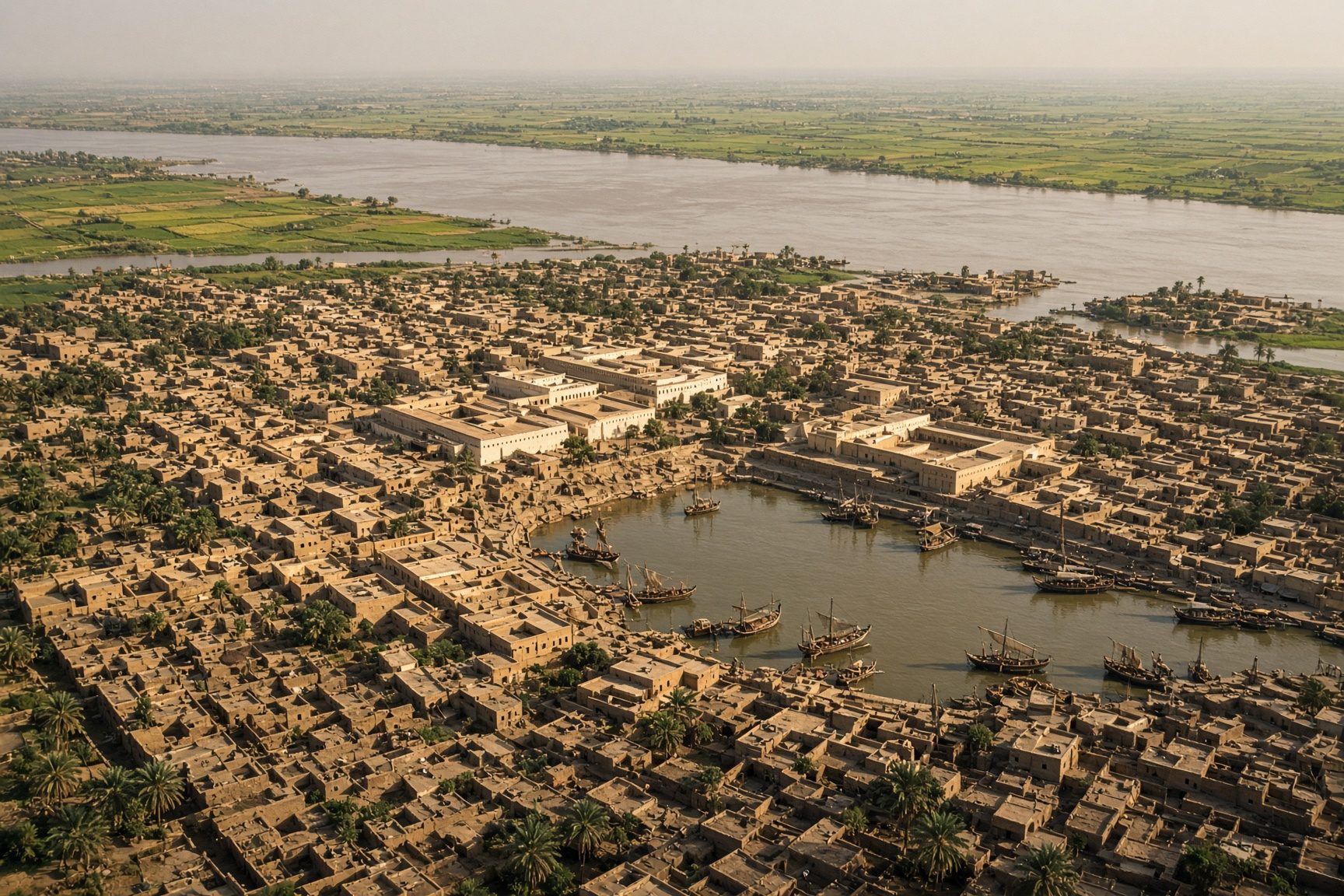
A reconstruction of Avaris, the Hyksos capital, on a Nile branch in the eastern Delta
Avaris, Tell el-Dab‘a, eastern Nile Delta, Egypt.16th century BC. AI reconstruction, not a photograph.

I · Old Testament

The Israelites were the Hyksos pharaohs

Josephus had already identified the Israelites with the Hyksos, the shepherd kings of Lower Egypt. Their capital was Avaris, at Tell el-Dab‘a in the eastern Delta. Follow that identification through, and the Exodus is the Hyksos expulsion of the sixteenth century BC, not a labour walk under Ramesses in the thirteenth.

The short page is The Hyksos and Avaris. It includes a simplified map of Avaris, Memphis, Thebes and the eastern Nile Delta. The questions are further down this page.

The record. Josephus, Against Apion, quoting Manetho on the shepherd kings and Avaris. The section in Thackeray’s 1926 Loeb is 1.73–92, and it is now a record in the Evidence Library. The Tempest Stele is the Egyptian record of Ahmose.

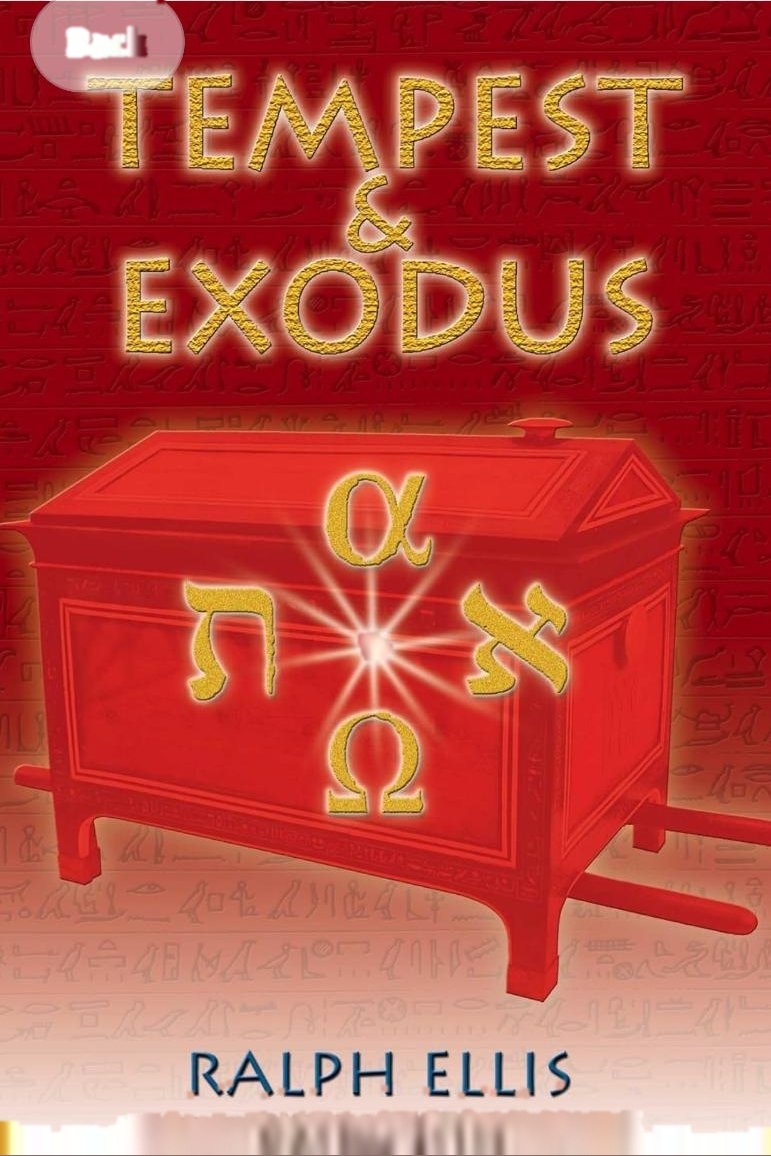
Ellis’ reading. That is the step taken in the books. The biblical Exodus is read as the Hyksos expulsion. The case is in Jesus, Last of the Pharaohs, Tempest & Exodus, and Eden in Egypt.
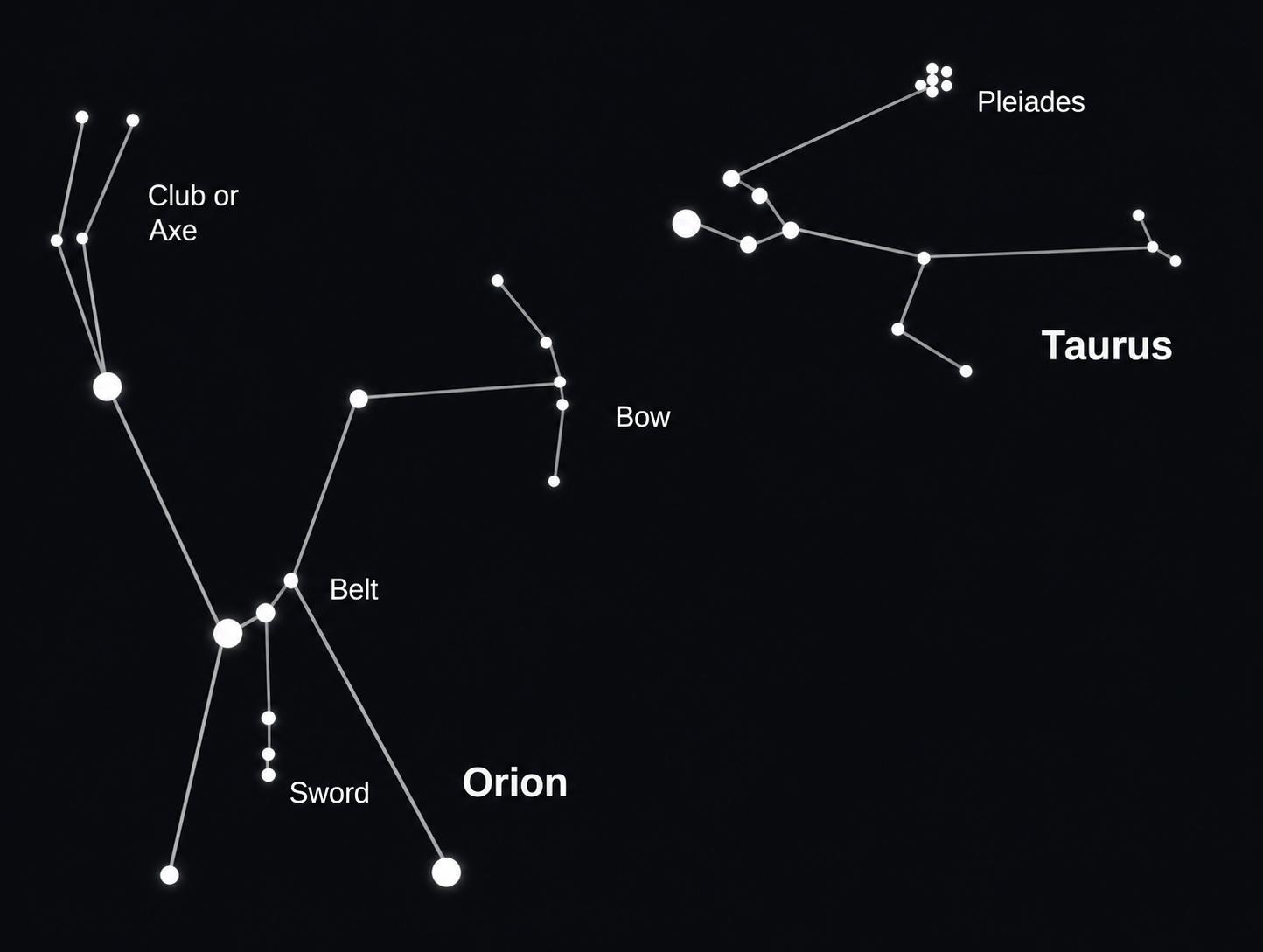
Orion facing Taurus, with the Pleiades at the bull’s neck, and the club or axe, bow, belt, and sword marked
Orion facing Taurus, the Pleiades at the bull’s neck.Diagram after Ralph Ellis, 2026.
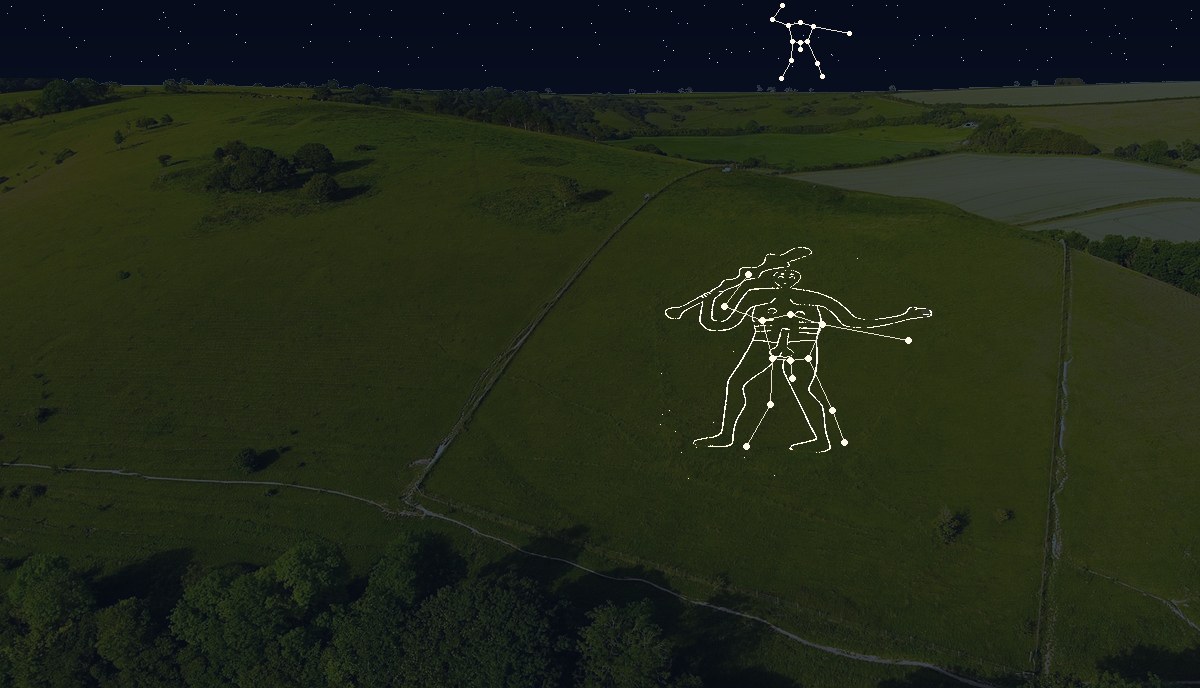
The Cerne Abbas Giant at night, with Orion marked in the same pose in the sky and on the figure
Cerne Abbas Giant, Cerne Abbas, Dorset, England.Hill figure photographed. Orion’s lines were added to the sky.

The change of age

From Taurus to Aries

Gilgamesh is read as Orion. The epic arms him with a club or an axe, a bow, a belt and a sword, and it sets him against the Bull of Heaven. The Pleiades stand at the neck of Taurus. That battle is taken as the end of the Great Month of Taurus, about 1750 BC, and the coming of Aries, the age in which the founding of the Hyksos, the shepherd kings, is placed. The same figure, as the books have it, is cut into the chalk at Cerne Abbas: a giant with a club, read as Hercules and therefore as Orion.

Explore the book behind this research

Continue with the Books

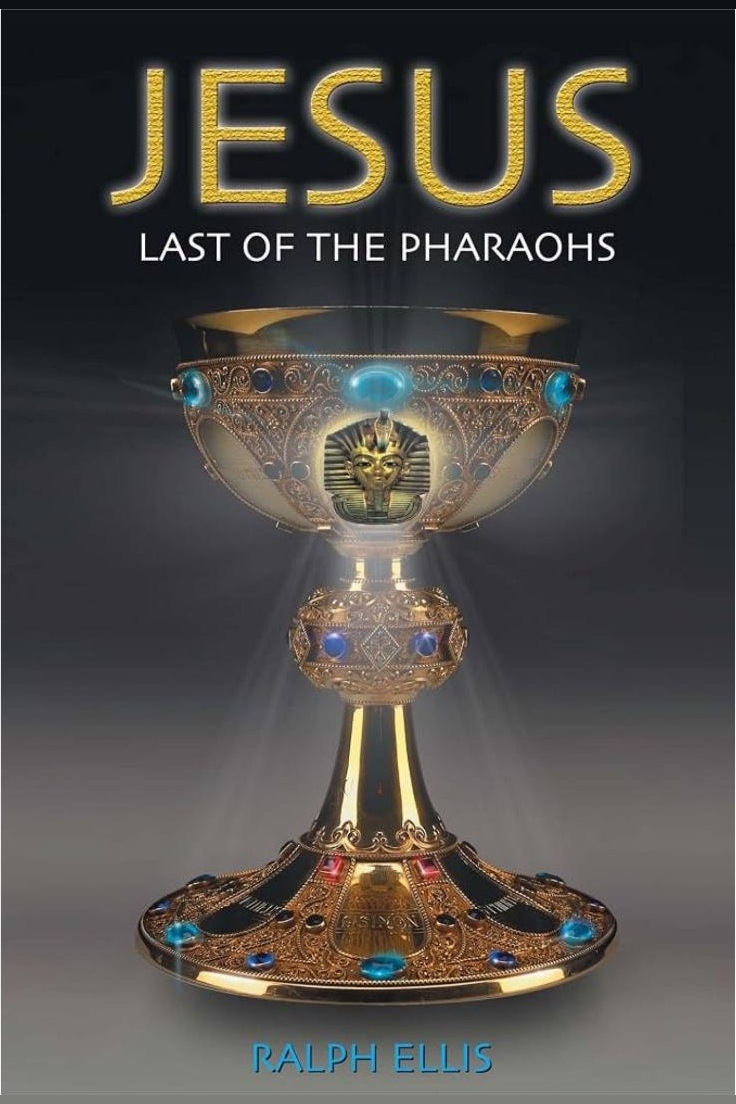
Jesus, Last of the Pharaohs is the opening volume of the Egyptian Testament. Tempest & Exodus is the next volume in that sequence.
Questions

Who were the Hyksos, and why are they important to the Exodus?

Manetho, the Egyptian priest, described foreign rulers of the Delta. He called them Hyksos, shepherd kings, and put their capital at Avaris. His books are lost. Josephus preserved the account and said these people were the ancestors of the Israelites. Ellis starts there. If that identification holds, the Exodus is the Hyksos expulsion, not a labour walk under Ramesses.

The identification is the one Josephus gives. The wider chronology is the reconstruction Ellis builds from that passage, in the Egyptian Testament.

Did Josephus connect the Israelites with the Hyksos?

In the account Ellis uses, yes. Against Apion quotes Manetho on the shepherd kings of Avaris and relates them to the Israelites. Ellis follows that passage through. He then argues that named patriarchs can be found among the Hyksos pharaohs.

Josephus makes the ancient connection. The further names Ralph attaches to it are his own, and they are not the usual reading of the same passage.

What was Avaris, and where was it located?

Avaris was the Hyksos capital. The site is Tell el-Dab‘a, on a Nile branch in the eastern Delta. Ellis treats that city as the place the Israelites left. The page here places the city in about the sixteenth century BC, when Avaris fell to the Theban king Ahmose.

Tell el-Dab‘a is the archaeological site. Treating Avaris as the place the Israelites left is the reading in the Egyptian Testament.

How does Ralph Ellis reinterpret the traditional chronology of the Exodus?

The seminary date he argues against is a Ramesside departure in the thirteenth century BC, about 1240. He places the Exodus at the Hyksos expulsion of the sixteenth century, about 1570 BC, when Avaris fell. The people he cannot find in Canaan in the later century, he looks for in Egypt in the earlier one.

The sixteenth-century date is the reconstruction in the Egyptian Testament. It is not the chronology usually taught.

Which Egyptian records does Ralph use in developing his argument?

He uses Manetho as Josephus preserved him, and the Tempest Stele of Ahmose, which records a storm and a darkness. He reads that stele against the plagues of the Exodus. In the same series he also sets Adam and Eve beside Akhenaten and Nefertiti.

The stele is an Egyptian record of a storm. The comparison with the plagues is made in the Egyptian Testament, and it is not a comparison the inscription itself makes.
II · New Testament

Jesus was a king of Edessa

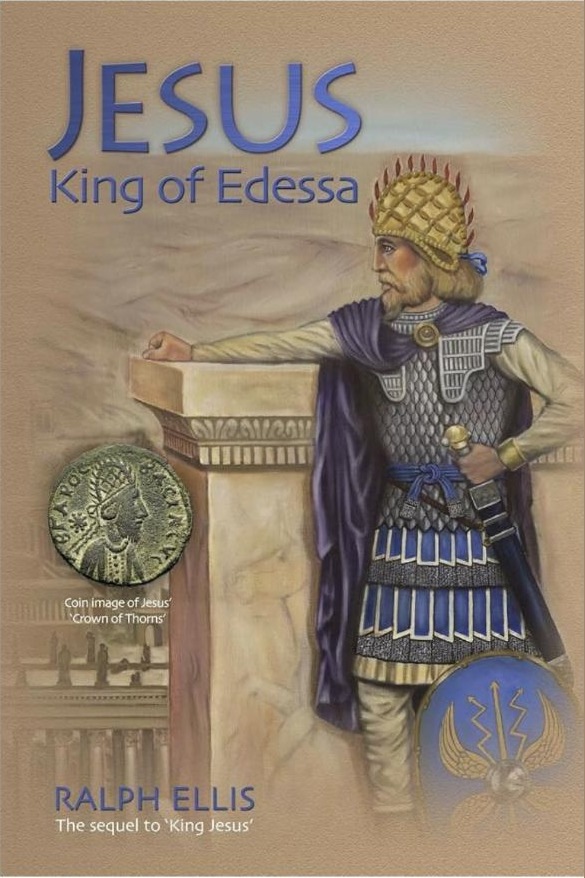
The gospels call him King of the Jews. Persian Magi attend the birth, and he commands men and money. From Cleopatra VII the books trace a line into a first-century royal house of northern Syria. A coin of Edessa still shows the spiked radiate crown later remembered as thorns.

The short page is The king of Edessa. The questions are further down this page.

The record. Josephus on Izates of Adiabene. The king-list of Edessa for Manu VI. Josephus on the three men crucified after Jerusalem fell, of whom one recovered. Matthew 2:23 for “Nazarene.”

Ellis’ reading. In Jesus, King of Edessa those names are treated as one royal house, and that king is kept distinct from Azizas of Emesa.

Explore the book behind this research

Continue with the Books

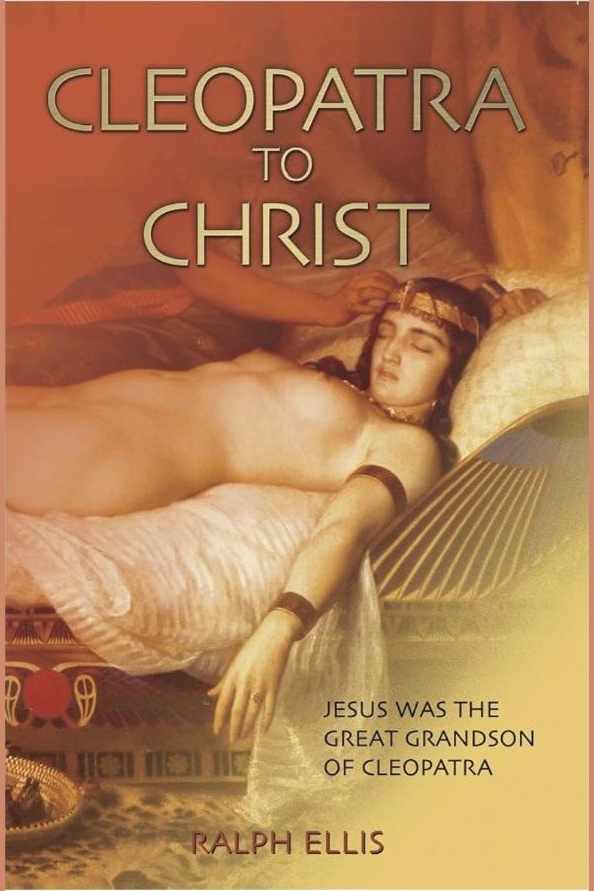
Cleopatra to Christ begins the King Jesus sequence. Jesus, King of Edessa is the third volume of the trilogy, and it is the book for that identification.

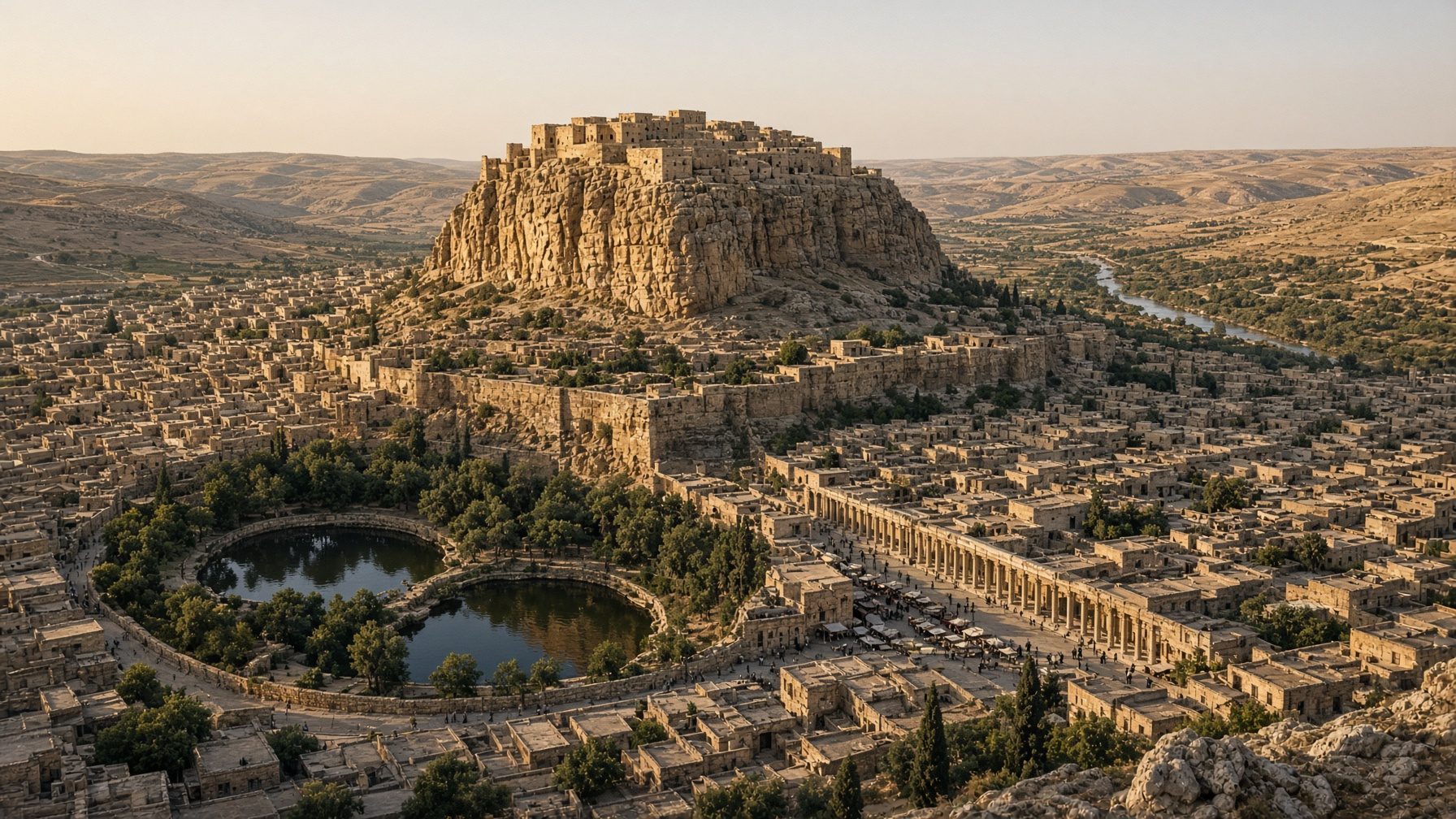
Edessa, capital of Osroene, about AD 60. Reconstruction of the palace on the rock and the walled city below.
Edessa, Osroene (now Şanlıurfa, Turkey).About AD 60. AI reconstruction, not a photograph.

Questions

What does Ralph Ellis argue about Jesus and the kingdom of Edessa?

He locates the gospel king as King Izas of Edessa, in the Jewish Revolt of the sixties, not as a carpenter of the thirties. He joins Josephus’s Izates of Adiabene with Manu VI of Edessa, and he reads the gospel name beside that king. He says this king is not Azizas of Emesa.

The joining of those names is the argument of Jesus, King of Edessa. It is not a settled identification.

Where was Edessa, and why was it historically important?

Edessa was the capital of Osroene, in northern Syria. The modern city is Şanlıurfa, in Turkey. Ellis treats its first-century royal house as the house behind the gospel king, and he points to a coin of Edessa with the spiked radiate crown later remembered as thorns.

Edessa and the kingdom of Osroene are historical. That their king was Jesus is the proposal of the King Jesus books, not a settled identification.

Who were the royal families associated with Edessa and Adiabene?

Josephus writes of Izates of Adiabene, and shortens the name to Izas. The king of Edessa in those years was Manu VI. Ellis treats Adiabene as Josephus’s name for Edessa, because Queen Helena of Adiabene was married to King Abgar of Edessa. The name he uses is King Izas Manu.

Helena, Abgar, Izates, and Manu VI are in the records he cites. The claim that they are one house, and that the house is Jesus’s, is the argument of Cleopatra to Christ and Jesus, King of Edessa.

How does Ralph reinterpret the dating of the gospel narratives?

He moves the drama from the thirties to the Revolt of the sixties. On his account the king became king of the Jews about AD 60. After Jerusalem fell in AD 70, Josephus says three leaders were crucified and one recovered. Ellis reads that survivor as Izas.

Josephus records the crucifixions. Ellis identifies the survivor, and he moves the gospel date into the Revolt. Neither step is stated by Josephus.

Which historical sources does he use to support his proposed identifications?

The pages here name Josephus on Izates of Adiabene, the king-list of Edessa for Manu VI, Josephus on the three men crucified after Jerusalem fell, and Matthew 2:23 for the word Nazarene. A coin of Edessa is cited for the radiate crown. No ancient page already states the identification.

The sources are listed on the Edessa pages. What he concludes from them is set out in Jesus, King of Edessa, and it is not a conclusion those sources state for themselves.

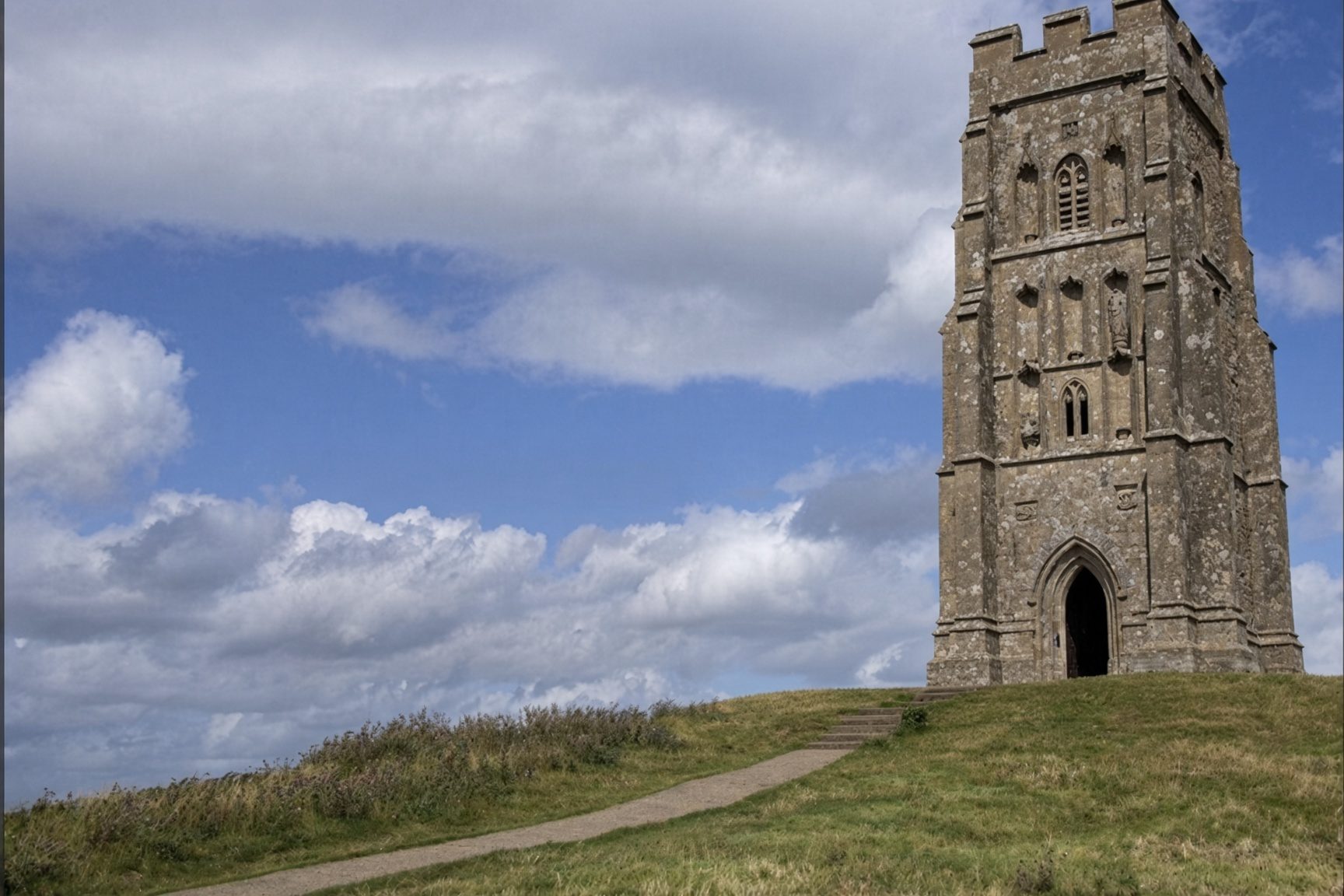
St Michael’s Tower on Glastonbury Tor, Somerset, with the path up the hill and no people
St Michael’s Tower, Glastonbury Tor, Somerset.10 August 2019. Rossographer, CC BY-SA 2.0; figures removed.

III · Britain

King Arthur is that king, remembered in the west

After the Revolt comes crucifixion, a reprieve, and exile to a Roman prison in Britain: twelve companions, a table, a wounded king, a Grail. The Arthurian cycle is read as the British afterlife of the Edessan house.

The short page is Arthur. The questions are further down this page.

The record. The Arthurian stories name a king, twelve companions, a table, a wound, and a Grail.

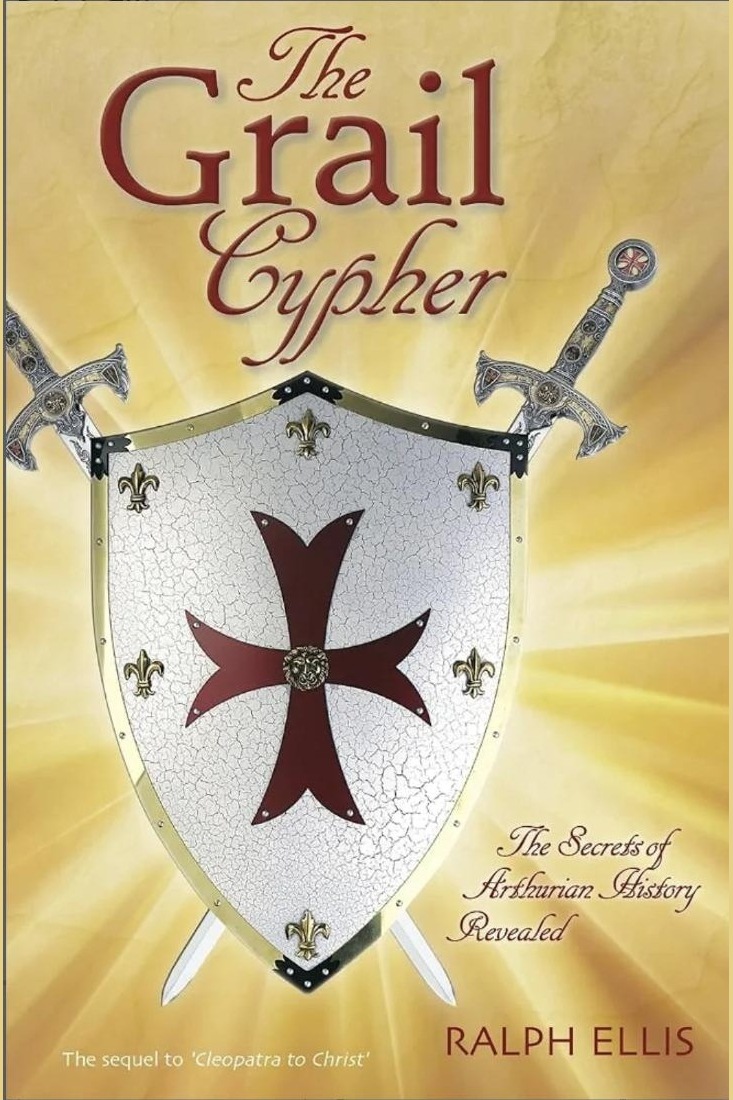
Ellis’ reading. That cycle is read as the British memory of the king of Edessa. The case is in The Grail Cypher.

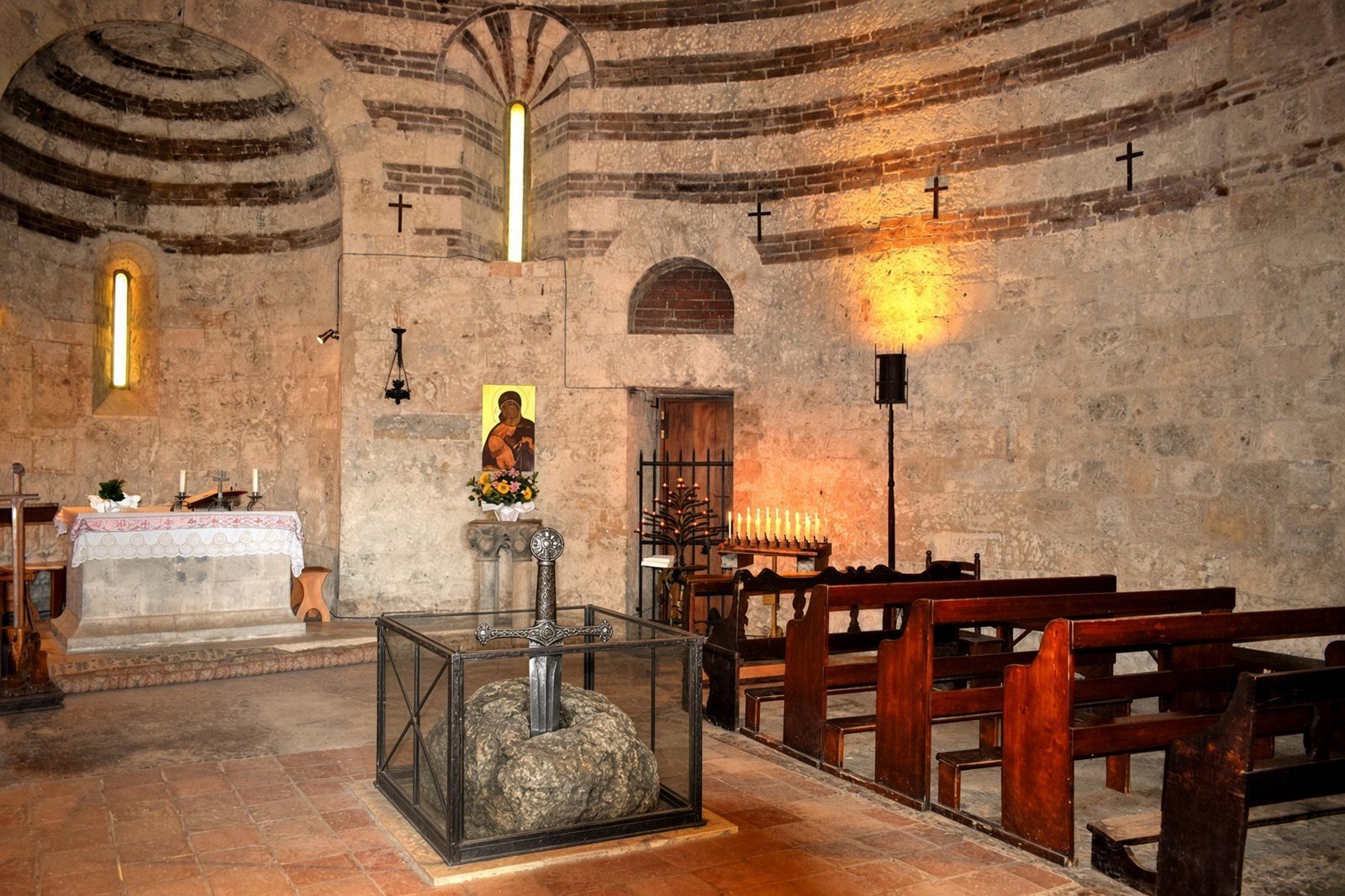
The sword of Galgano set in the stone inside Montesiepi Chapel in Tuscany
Montesiepi Chapel, Chiusdino, Tuscany.The sword of Galgano, 1180.
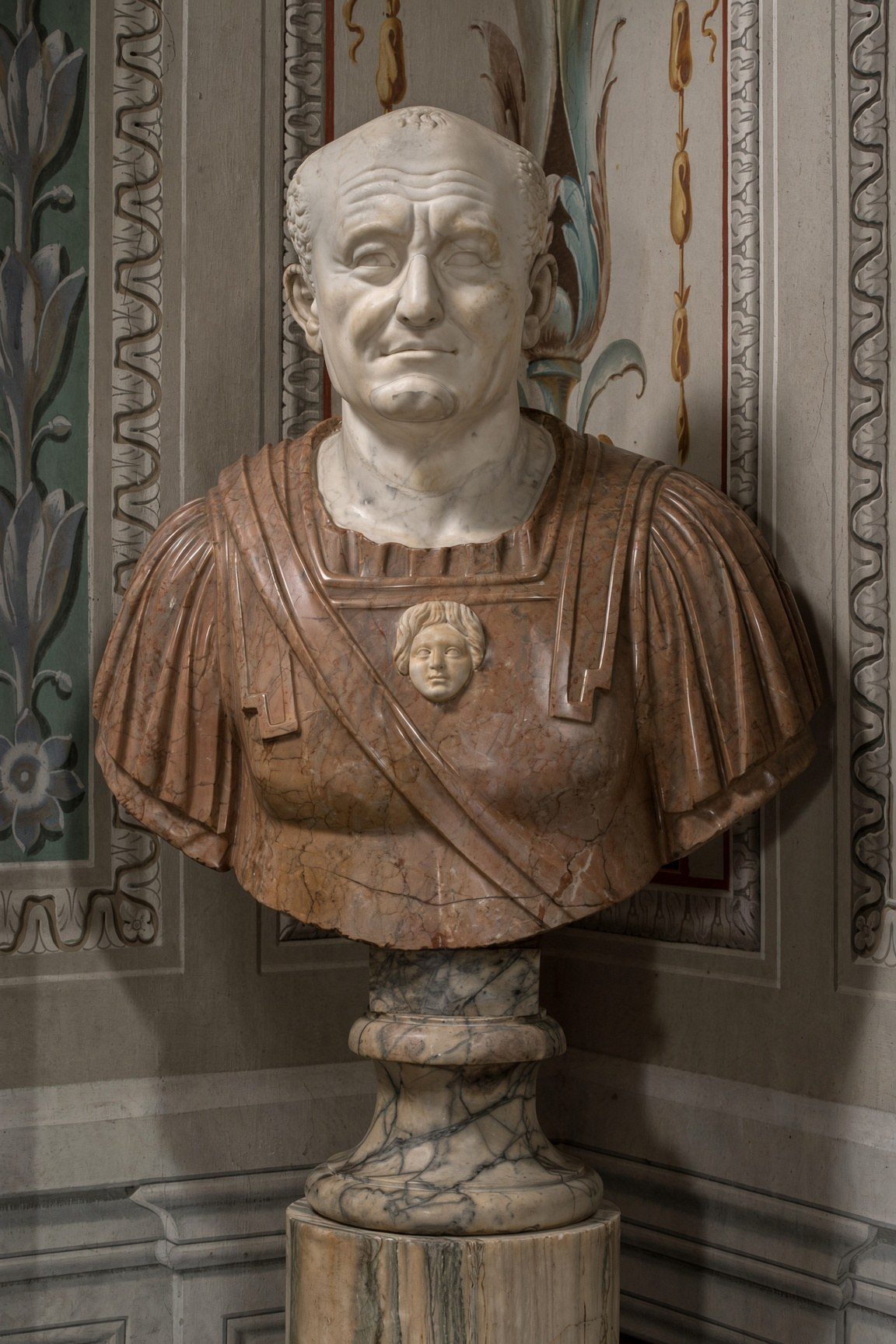
Marble portrait of the Roman emperor Vespasian
Emperor Vespasian.Marble portrait. Commander in the Bristol Merlin.

Explore the book behind this research

Continue with the Books

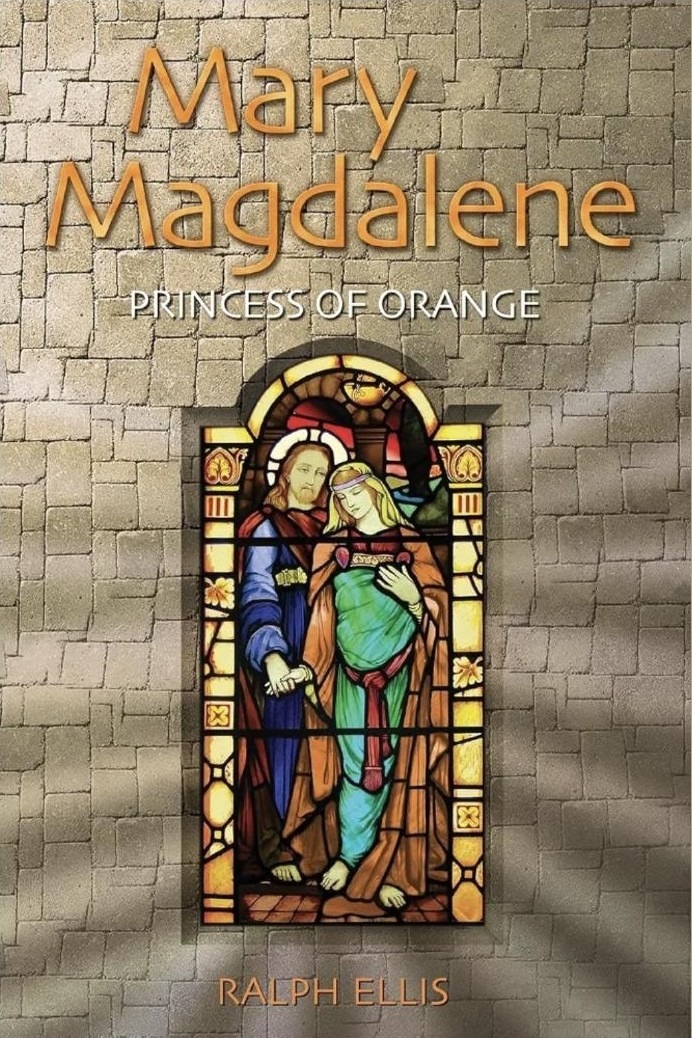
The Grail Cypher is volume 4 of the five King Jesus books. It is not a fourth volume of the trilogy, and there is no separate Arthurian series. Mary Magdalene, Princess of Orange is volume 5.

Questions

Was King Arthur based on a historical person?

There is no Arthur in the early record. No first-century text calls him Arthur. Ellis’ proposal is that the name is a later British memory of the king of Edessa: crucified, reprieved, and held in Britain. That proposal is not a claim that a fifth-century Arthur has been found.

The identification with the king of Edessa is the argument of The Grail Cypher, not a claim those early sources make.

How does Ralph connect the Arthurian legends to first-century history?

He reads King Arthur as the British name of the king of Edessa, and the knights as the twelve of the gospel. The king, on this account, was exiled to the far end of the empire after the Revolt. The romance, he argues, does not appear until the twelfth century.

This is the reading in King Jesus and The Grail Cypher, not the usual account of Arthur.

What role does the Holy Grail play in Ralph's interpretation?

He reads the Grail, the table, the wound, and the twelve companions as the western memory of that same king and his house. In The Grail Cypher he also reads Joseph of Arimathea, whom he identifies with Josephus, as the figure who carries the story. The Grail is not presented here as an object that has been found.

The Grail, on these pages, is a reading of the later stories. No first-century text here calls the object by that name.

How does Ralph interpret the connection between Arthurian tradition and early Christianity?

He dates the romance to the early twelfth century, after the First Crusade took Edessa in 1098 and a manuscript from that city reached the courts of northern France. Mary Magdalene, Princess of Orange follows the same house west, to Provence. The link he draws is from Edessa to those later stories, not from a British church of the first century that the early record names.

The Crusade date is historical. The claim about the manuscript, and the identification of Arthur with the king of Edessa, are the argument of the King Jesus books.

Which texts does Ralph use in examining Arthurian history?

The page is plain about the gap: no first-century text calls him Arthur. Ellis works from the later romance, which he dates after 1098, and from the first-century record he has already used for the king of Edessa. The books are King Jesus and The Grail Cypher. A shorter article treats the Round Table and the Last Supper.

The absence of the name from the early record is part of the case. The reading of the later romance is the one set out in King Jesus and The Grail Cypher.