Jesus and Edessa
The Ark of Edessa
Could the seat at Sogmatar be the biblical ark?
Ralph Ellis
Ancient Origins, 15 July 2017. The page prints “Copyright © 2015 Ralph Ellis.”
A Sogmatar inscription of the Seleucid year 476 is read as a seat kept at the Edessan necropolis, and the article asks whether that seat is the biblical ark.
The inscription
Ellis sets the scene in AD 165, at the Edessan necropolis of Sogmatar, southeast of Edessa, modern Şanlıurfa. He says King Wa’el had an inscription cut on the sacred hill. In his translation it begins “In Sebat of the year 476,” which he reads as the Seleucid era. The lines he quotes speak of a pillar set on the mountain and a seat given to the person who maintains it. If the seat is withheld, or the pillar ruined, the god will judge.
The edition and the translator are not named in that opening. The English is the text he published. It should not be treated as a separate critical edition.
His reading
Before he interprets the words, he describes the hill. It is the centre of the royal necropolis, in barren country. He notes that the man-made hill is the same size and shape as Silbury Hill in England, and he says why that likeness exists is open to speculation. That comparison is his observation, not a measured survey printed here.
He then asks whether the seat in the inscription is the biblical ark. He points the reader to Genesis 28:18, Jacob’s stone. The article, as the magazine presents it, belongs with The King Jesus Trilogy. The identification of the seat with the ark is his question and his conclusion. It is not the ordinary reading of either the inscription or the biblical ark.
The full article is his, and the magazine page still holds it. The headline there is “Could the Ark Described at Edessa Be the Biblical Ark of the Covenant?” This page gives the opening he published. It does not replace the article.
Evidence library
Sources
- Ralph Ellis, “Could the Ark Described at Edessa Be the Biblical Ark of the Covenant?,” Ancient Origins, 15 July 2017.
- The Sogmatar inscription, Seleucid year 476, as he quotes it there. The edition and translator are not named.
- Genesis 28:18, as he points to it. He does not name a Hebrew edition. The Latin checked for the library is the same public-domain Vulgate, which in the next verse names Bethel.
Related records
Explore the book behind this research
Continue with the Books
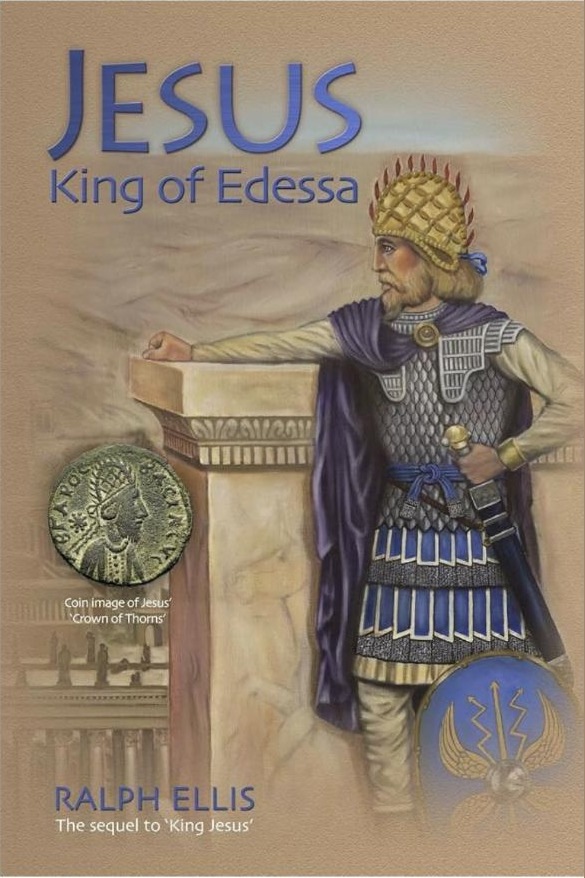
Jesus, King of Edessa
A first-century king in the historical record

King Jesus
Prince of Judaea and Rome
Cleopatra to Christ
Jesus, the great-grandson of Cleopatra